
The Personification of Medication
As the clock struck midnight and 2018 turned into 2019, I made a dangerous New Year’s resolution to stop taking my medication. Many people with bipolar disorder do this when a period of stability creates the illusion of permanent healing. I did not yet understand that bipolar disorder is a chronic medical condition that requires lifetime management and consistent care. That New Year’s resolution quickly proved to be a serious mistake that led to new legal consequences and three more inpatient psychiatric hospitalizations. During one of those stays, my parents were told by doctors that they were not sure if I would come out of drug-induced psychosis.
Upon release from the third hospitalization that year, I began seeing a therapist who specializes in bipolar disorder. This marked the true beginning of what would later grow into my Four Pillars Model, because it showed me how essential therapy is alongside psychiatry. These two realms form the scientific and clinical foundation of healing in my life. It was in those early therapy sessions that I learned to personify my medications, a practice that reshaped my understanding of treatment and anchored me in a path toward lasting stability.
I did not realize at the time that this small shift in perspective would become a defining moment in my healing. During one of my early therapy sessions, my therapist guided me through an exercise that felt unusual at first. She asked me to take out my actual medications, study their shapes and colors, and draw each one on paper. She encouraged me to give them personalities and names so I could relate to them with compassion rather than fear or shame. Following her lead, I sketched each pill exactly as it appeared in real life and named them Mr. Klonopin, Mr. Lamictal, and Ms. Prozac. What began as a simple drawing assignment gradually became something deeply emotional. I started speaking to them in session and later on my own. At first it felt awkward, but over time the conversations became surprisingly therapeutic.
This exercise did not just help me understand my medications. It helped me understand myself. It created a bridge between my emotional world and my medical treatment, allowing me to see my prescriptions not as signs of failure but as partners in my stability. Each medication plays a unique role. Klonopin eases intense anxiety, Lamictal prevents bipolar highs and lows, and Prozac lifts my mood while helping me stay clear and resilient. Every now and then, as I take them from my pill holder each morning, I smile and offer a quiet, “Good morning. Thank you.”
This small practice of mindfulness and gratitude reshaped my approach to medication compliance. I know how difficult it can be to accept a lifelong diagnosis like bipolar disorder. I also know how dangerous it can be to go without treatment. When others share their fear or hesitation about medication, I often tell this story. I share it because medication stigma is still powerful, and many people suffer in silence. No one should feel ashamed of the tools that help them heal.
Healing began to feel whole again when I realized that no single approach could carry the weight of recovery by itself. Mental illness can feel isolating, but healing does not have to be. Therapy empowered me to take ownership of my diagnosis and reframe what once felt frightening or foreign. I still attend therapy, and it continues to shape my growth. Just as physical therapy strengthens the body, psychotherapy strengthens the brain, guiding us toward steady, lasting healing. My faith community also supported me through these difficult seasons, reminding me that healing happens in connection rather than isolation.
My Four Pillars Model, built on psychiatry, therapy, family, and faith, contains a truth I have lived out. Each pillar supports the others, and when one weakens, they all begin to fall. Therapy, especially the exercise of personifying my medications, keeps me committed to my treatment. It helped me understand the value of my prescriptions on a personal level and fundamentally changed how I view my care. My resistance to medication compliance has been completely transformed, and the three medications I once saw as enemies have become three of my closest companions in healing.
The trust I built through therapy strengthened my relationship with my psychiatrist. The stability I gained through medication allowed me to engage fully with my faith community and show up more completely for my family. Medication, therapy, family, and faith gave me my life back, and I walk this journey with gratitude.
To learn more about my journey and the lessons I’ve gained, I invite you to explore My Story, additional Pillar Posts.
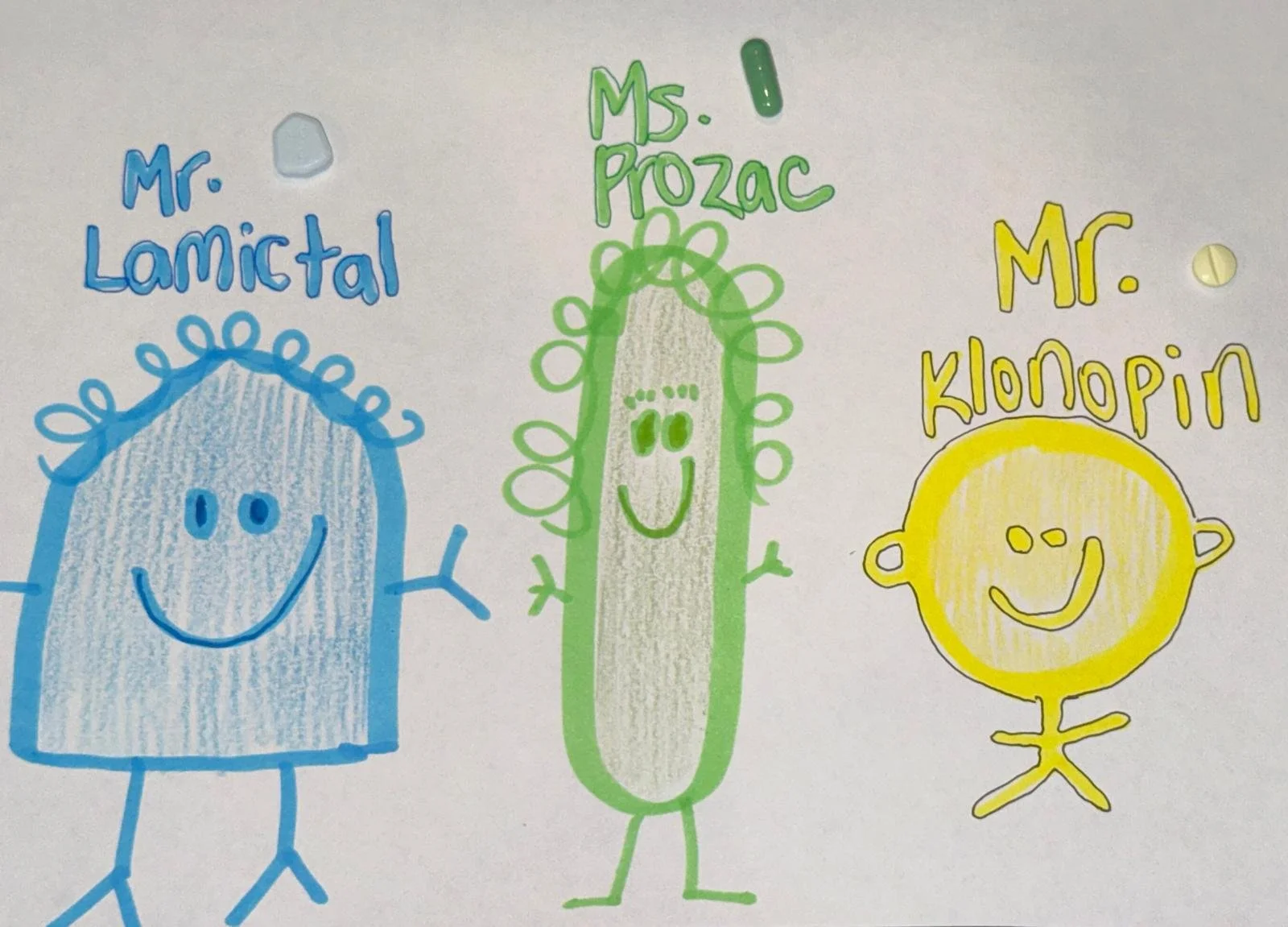
Mr. Lamictal stabilizes my mood, Ms. Prozac lifts depressive lows, and Mr. Klonopin calms anxiety. Together, they help me manage bipolar disorder with balance and clarity.